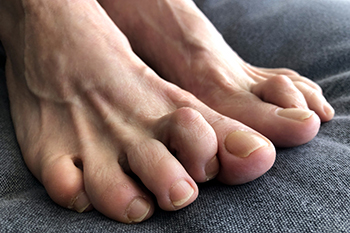
Hammertoe occurs when an imbalance in the muscles and tendons causes a toe to develop an abnormal bend. The middle joint is commonly affected, giving the toe its characteristic appearance. Hammertoe can be flexible in its early stages or rigid as the deformity progresses. A flexible toe can still move into a straighter position. A rigid toe remains fixed and may become increasingly uncomfortable.
Hammertoe symptoms often become more noticeable when walking or wearing shoes. Pain may develop in the affected toe or at the toe joint where it meets the foot. The bent joint may rub against footwear and develop a corn or callus. Some people experience swelling, redness, or tenderness after spending time on their feet. Wearing shoes that do not fit properly can make these symptoms worse. High heels may also crowd the toes and increase pressure.
Your natural foot structure can also affect your risk. People with high arches may place greater pressure on the front of the foot. Flat feet can alter normal walking mechanics and contribute to uneven pressure. Other risk factors include family history, aging, and footwear that squeezes the toes. Recognizing these factors early may help reduce ongoing irritation and protect comfortable movement.
A podiatrist can evaluate the toe and determine whether the deformity is flexible or rigid. The examination may include checking your walking pattern and joint movement. Treatment can involve changing footwear, using protective padding, or prescribing custom orthotics. Severe or rigid deformities may require surgery when conservative care does not provide adequate relief. If you have a painful toe or one that is bent, it is suggested that you consult a podiatrist for effective relief, treatment, and management solutions.
Hammertoe
Hammertoes can be a painful condition to live with. For more information, contact one of our podiatrists from Trinity Foot & Ankle . Our doctors will answer any of your foot- and ankle-related questions.
Hammertoe is a foot deformity that affects the joints of the second, third, fourth, or fifth toes of your feet. It is a painful foot condition in which these toes curl and arch up, which can often lead to pain when wearing footwear.
Symptoms
- Pain in the affected toes
- Development of corns or calluses due to friction
- Inflammation
- Redness
- Contracture of the toes
Causes
Genetics – People who are genetically predisposed to hammertoe are often more susceptible
Arthritis – Because arthritis affects the joints in your toes, further deformities stemming from arthritis can occur
Trauma – Direct trauma to the toes could potentially lead to hammertoe
Ill-fitting shoes – Undue pressure on the front of the toes from ill-fitting shoes can potentially lead to the development of hammertoe
Treatment
Orthotics – Custom made inserts can be used to help relieve pressure placed on the toes and therefore relieve some of the pain associated with it
Medications – Oral medications such as anti-inflammatories or NSAIDs could be used to treat the pain and inflammation hammertoes causes. Injections of corticosteroids are also sometimes used
Surgery – In more severe cases where the hammertoes have become more rigid, foot surgery is a potential option
If you have any questions, please feel free to contact our office located in Trinity, FL . We offer the newest diagnostic and treatment technologies for all your foot care needs.
